Web3 security isn’t just about code, it’s about the people who dedicate their careers to protecting the ecosystem, and with it a vision for a better future.
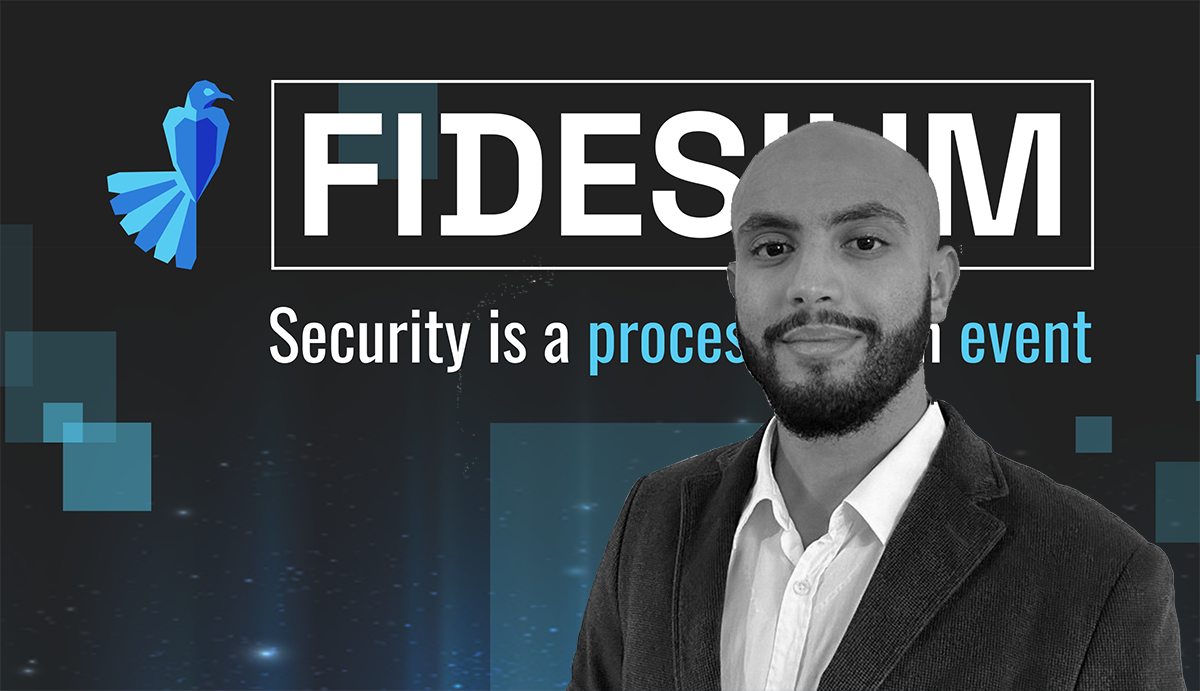
One of them is Chadi Sebbar, a multilingual security engineer whose unique path shows what it takes to build trust in a decentralized world.
Who This Story Is For
If you’re a builder, developer, or simply curious about the people behind Fidesium, this story is for you.
You’ll discover how Chadi Sebbar built his career as a Web3 security engineer, which skills matter most in smart contract auditing, and why human perspective is just as critical as technical precision.
Where Did The Journey Begin?
Chadi Sebbar’s story starts in Casablanca, Morocco, where curiosity met creativity.
Growing up, he was fascinated by how the tools we use every day actually work beneath the surface.
Fluent in Arabic, French, English, Portuguese, Spanish, and Italian, Chadi developed the kind of global mindset that modern cybersecurity requires.
After Casablanca came Paris, where he studied and worked in tech, before moving to Rio de Janeiro, continuing a career that spans cultures and time zones.
That multicultural background shapes the way he thinks about security: vulnerabilities aren’t only technical – they’re human, cultural, and communicative.
How Did Cybersecurity Click?
At 15, Chadi began experimenting with computers and discovering how software could fail.
That hands-on curiosity grew into formal computer science studies.
While his background in development fortified, so did his interest in cybersecurity grow, because it required a meticulous, deep understanding of how technology works to identify its weak spots.
“Finding those weak spots before a hacker does is thrilling,” he says.
The deeper he went into development, the more he understood that security rewards people who think several moves ahead – detective work in digital form.
What drew him to Web3?
Chadi first heard about Bitcoin in 2015, but his real entry into Web3 began in 2020, when smart contracts caught his attention.
“Smart contracts are immutable after deployment. Large funds are at risk, which makes it even more exciting to work in this area.”
He spent evenings researching, testing exploits in safe environments, and learning the unique logic of blockchain systems.
Web3 combined everything he loved about security: high stakes, open innovation, and global impact.
What Changed Moving From Traditional To Web3?
Chadi’s transition from traditional cybersecurity into Web3 came naturally, but it also came with a clear realisation; blockchain security demands a new mindset:
“The most important principle is that security is a continuous process, not a one-time event,” Chadi explains.
“Security needs to be considered from the very beginning, starting with the business logic itself. If the core logic is flawed, no amount of patching can fully secure the system.”
In Web3, where financial and operational logic are written directly into code, that insight carries extra weight.
“Once the foundation is solid, you build the technical architecture using principles like zero-trust and least privilege, meaning people should only have access to what they absolutely need,” he continues.
“Then, and only then, should you focus on the code layer, like smart contracts. And even after launch, you need to continuously review every update before it goes live. A single, limited-scope audit simply can’t provide lasting security guarantees.”
This principle defines Fidesium’s approach.
A one-time audit can’t protect evolving codebases where new commits, libraries, and dependencies appear daily.
“Of course, the exact approach depends on your threat model,” he adds, “but when you’re handling significant value on-chain, as most Web3 projects do, security must be a top priority from day one, not an afterthought.”
This holistic perspective bridges Chadi’s traditional security roots with the fast-paced demands of Web3, where continuous vigilance, not static reports, defines real protection.
What Does A Web3 Security Engineer Do Daily?
A typical day starts with the Fidesium team reviewing recent vulnerabilities, new exploit reports, and roadmap priorities.
Then comes deep work on automated smart-contract vulnerability detection, tuning scanners for speed, accuracy, and clarity.
He approaches security like a strategic game of precision, ensuring every detail aligns.
His evenings are dedicated to research – tracking new attack vectors across forums and the dark web to keep Fidesium and its clients one step ahead.
What Advice Does Chadi Have For Newcomers?
“Before jumping into Web3 security, build a solid foundation in traditional cybersecurity – systems, networks, protocols. You need to know how things work under the hood to spot how they can break.”
That grounding separates hobbyists from professionals.
“Once that’s solid, specialise: learn blockchain fundamentals, smart-contract behaviour, and common vulnerability classes.”
Technical mastery is only half the equation.
“Attention to detail is non-negotiable. And so is clear communication – you must explain complex risks so teams and clients can act fast.”
It’s the combination of clarity, curiosity, and depth that defines tomorrow’s best auditors.
Looking Ahead
“With time, more services will rely on blockchain technology, making Web3 security a core pillar,” Chadi says. “Security will become increasingly automated – faster, more affordable, and frictionless for projects of all sizes.”
That’s the direction Fidesium is already building toward: an intelligence layer powering trust in Web3 innovation via continuous, automated auditing that keeps up with how real teams ship code.
Conclusion
Chadi Sebbar’s journey reflects what defines true Web3 security: precision, curiosity, and an uncompromising respect for trust.
His path from Casablanca to Paris to Rio embodies the mindset that built Fidesium: global, detail-oriented, and human at its core.
Web3 doesn’t just need better tools; it needs a new kind of collaboration between builders and protectors – one where security moves at the speed of innovation.
That’s why Fidesium exists. Not just to detect risks, but to reshape how trust is built in decentralised systems.
Our approach isn’t about post-audit policing or fear-driven compliance.
It’s about enabling developers to ship confidently, knowing that every pull request, every contract, every commit is backed by an evolving intelligence layer – one designed to power the next era of secure Web3 innovation.
Because in a world where one line of code can define a reputation, security isn’t a gatekeeper; it’s the foundation of progress.
If you’re ready to discover how an evolving intelligence layer can change the way you ship code and build trust, run a free scan on fidesium.xyz.
Questions and Answers
Q: How do I start a smart contract auditor career?
A: Master systems/network security first, then specialize in Solidity/Vyper, the EVM, and common vuln classes.
Q: Which soft skills matter most?
A: Communication, cultural fluency, and relentless attention to detail.
Q: Why is continuous auditing important?
A: Code and dependencies change frequently; one-off audits go stale quickly.