For years, Web3 teams have treated security audits like a milestone: something you complete once, check off, and move past.
But as the ecosystem grows – and as attackers become more sophisticated – one truth has become impossible to ignore:
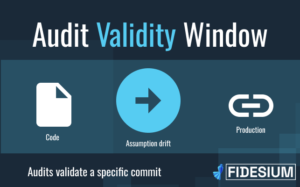
An audit is a snapshot.
Attackers operate in real time.
The exploit of a Yearn smart contract earlier this year made this painfully clear: even mature, well-respected, heavily audited protocols can still suffer catastrophic losses.
Not because their engineers were careless, but because the threat landscape evolves faster than any static audit can anticipate.
This is why the Web3 industry is shifting away from one-time smart contract audits toward continuous audit automation and runtime security monitoring.
In Web3, security cannot be a one-time event. It must be a continuous process.
This article explains, in simple terms:
- what actually happened in the Yearn exploit,
- why static audits inevitably age,
- and why continuous smart contract security is becoming the only reliable safeguard for teams who’ve raised capital and now carry user funds, investor expectations, and reputational risk.
What the Yearn Exploit Reveals About Modern Web3 Risk
That Yearn contract wasn’t vulnerable due to:
- missing access control
- simple reentrancy
- or incorrect logic
It was something the original auditors could not have anticipated:
A numerical instability triggered by extreme liquidity conditions.
The chain reaction:
- Dust-level liquidity
- A skewed AMM pool
- An invariant solver pushed outside its expected domain
- A numerical edge case that produced an impossible token supply
- An unlimited mint exploit
The attacker exploited:
A mathematical edge case in a custom AMM invariant,
triggered only under extreme market conditions, the original auditors never modelled.
In short:
Dust-level liquidity + skewed pool state
→ caused the invariant solver to become numerically unstable
→ resulting in an absurdly large supply calculation
→ enabling an infinite-mint of LP tokens
→ which could be cashed out for real assets.
This was an emergent vulnerability.
Not visible in normal conditions.
Not obvious in code review.
It was not known at the time of past audits.
This is the new reality:
Even formally reviewed code can become unsafe when the environment changes.
Why Even Expensive Smart Contract Audits Age Quickly
Founders often believe they’re safe after shipping with an audit report. But here’s what Web3 builders see every day:
A. New vulnerability classes emerge constantly
- economic attacks
- precision and mathematical instabilities
- calldata manipulation
- fee-on-transfer quirks
- proxy misconfigurations
- …
None of these stay static.
A contract safe today might be unsafe tomorrow simply because attackers discover a new angle.
B. Dependencies evolve behind your back
Protocols rely on:
- LSTs
- routers
- AMMs
- wrappers
- price feeds
- third-party libraries
- compiler versions
Any of these can introduce a new risk that didn’t exist (or wasn’t considered) during the audit.
C. Market Conditions Can Break “Safe” Assumptions
AMMs behave differently when liquidity dries up.
Accounting assumptions break in high-volatility environments.
“Impossible” edge cases become very possible during Black Swan events.
Your audit assumed a specific environment.
Attackers don’t.
D. Attackers iterate continuously
You are audited once.
Attackers test your code every day.
You see the asymmetry.
The Industry Shift: From Static Audits to Continuous Audit Automation
In modern Web3, the strongest teams no longer treat audits as the finish line.
They treat them as the first step in an ongoing security pipeline.
1. Pre-Deployment Audit Baseline (Automated Checks)
- risk scoring
- logic checks
- dependency analysis
- invariant-adjacent signals
- automated audit baseline
This reduces the cost and frequency of manual audits.
2. Continuous Audit (Post-Deployment Monitoring)
- anomaly detection
- dependency drift alerts
- cross-contract analysis
- risk score updates
- real-time exploit signal detection
Attackers test your code every day – so should you.
3. Manual Audit for Depth and Reasoning
A human audit is still essential before major releases.
But continuous audit automation ensures you NEVER have to pay $50k-$70k again every time you update your code.
This is the mindset shift happening across top protocols:
Security is not a product you buy – it’s a process you maintain.
Why Continuous Security Is Critical for Funded Teams
If you’ve raised capital, you have:
- user funds at risk,
- roadmap deadlines,
- a reputation to protect,
- investor expectations
- liquidity dependencies
- a token economy
A one-time audit simply cannot carry that weight.
Continuous security can – because it adapts as your code, your dependencies, and the ecosystem evolve.
Without it, a single numerical glitch or dependency change can:
- drain liquidity
- destroy TVL
- collapse token confidence
- permanently damage your reputation
This risk is existential.
How Fidesium Enables Automated Smart Contract Audits and Continuous Security
Fidesium’s mission is simple:
Make continuous, automated smart contract audits accessible to every Web3 team.
Fidesium provides:
1. Automated Audit Baseline (At Deploy)
- risk scoring
- logic checks
- dependency analysis
- automated audit
- coverage
- pre-deployment verification
- CI/CD guardrails
This replaces the need for repeated $50k–$70k audits after every code update.
2. Continuous Audit (Post Deploy)
- real-time anomaly detection
- cross-contract risk
- dependency drift
- exploit pattern alerts
- continuous risk scoring
Security keeps pace with attackers and your own development speed.
3. Manual Audits (Optional Human Review)
When you need deep reasoning, Fidesium’s team performs manual audits.
4. On-Chain Attestation (Trust Layer)
- versioned security states
- compliance-grade proof
- immutable audit record
transparent - investor/user communication
This builds trust without expensive re-audits.
What This Means For Your Team
Fidesium offers automated audit tooling as a subscription.
This means:
- No unpredictable audit invoices.
- No manual coordination.
- No waiting weeks for a review.
- No relying on outdated assumptions.
Instead, teams get:
- automated scanning,
- evolving detection capabilities,
- coverage for new vulnerability types as they emerge,
- and security that keeps pace with development – securely and affordably.
Founders flatten their security costs while increasing the projects security.
Engineers ship faster with guardrails.
Protocols stay protected as the threat landscape evolves.
This isn’t a marketing slogan – it’s the only sustainable model for Web3 moving forward.